
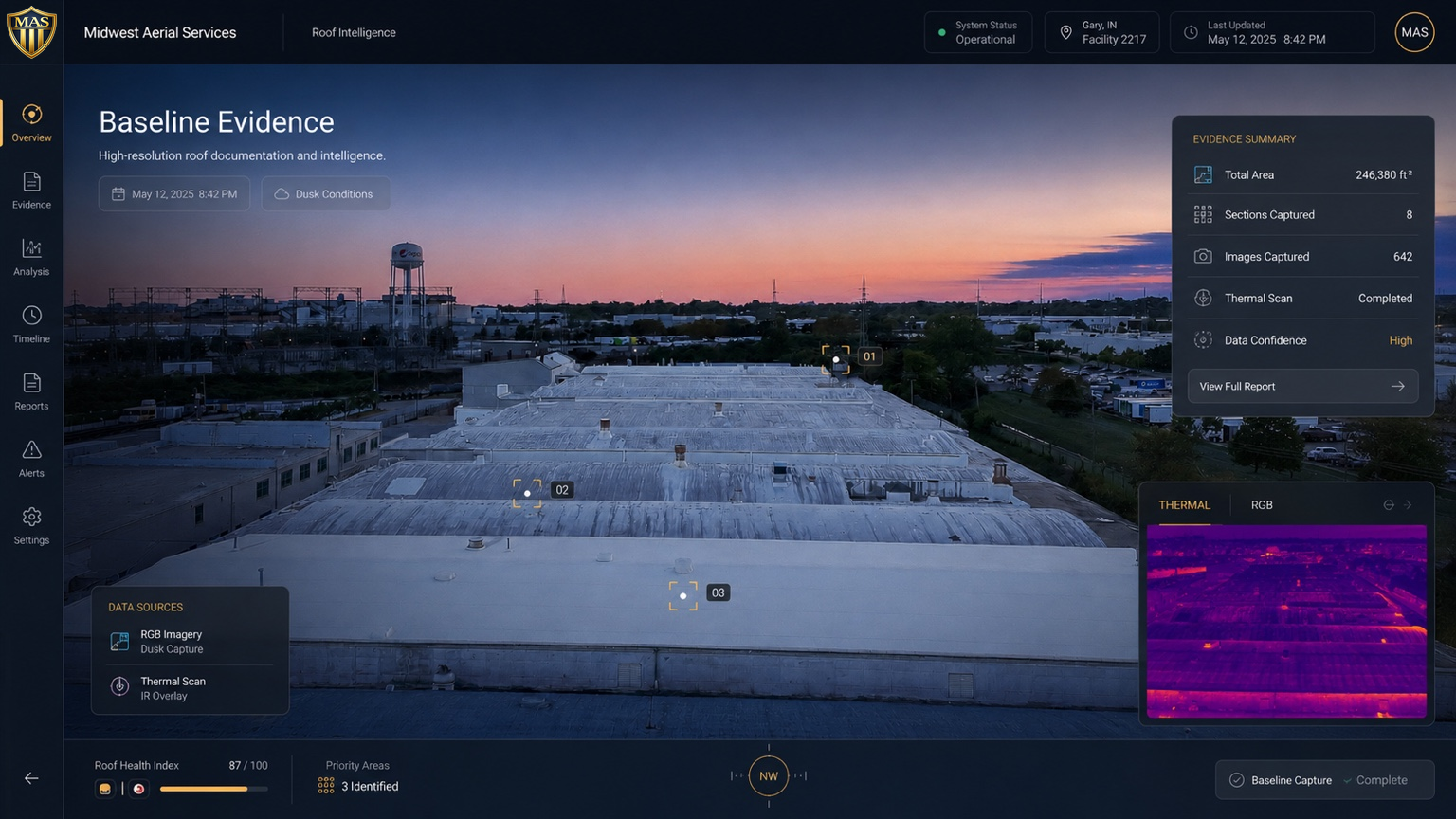
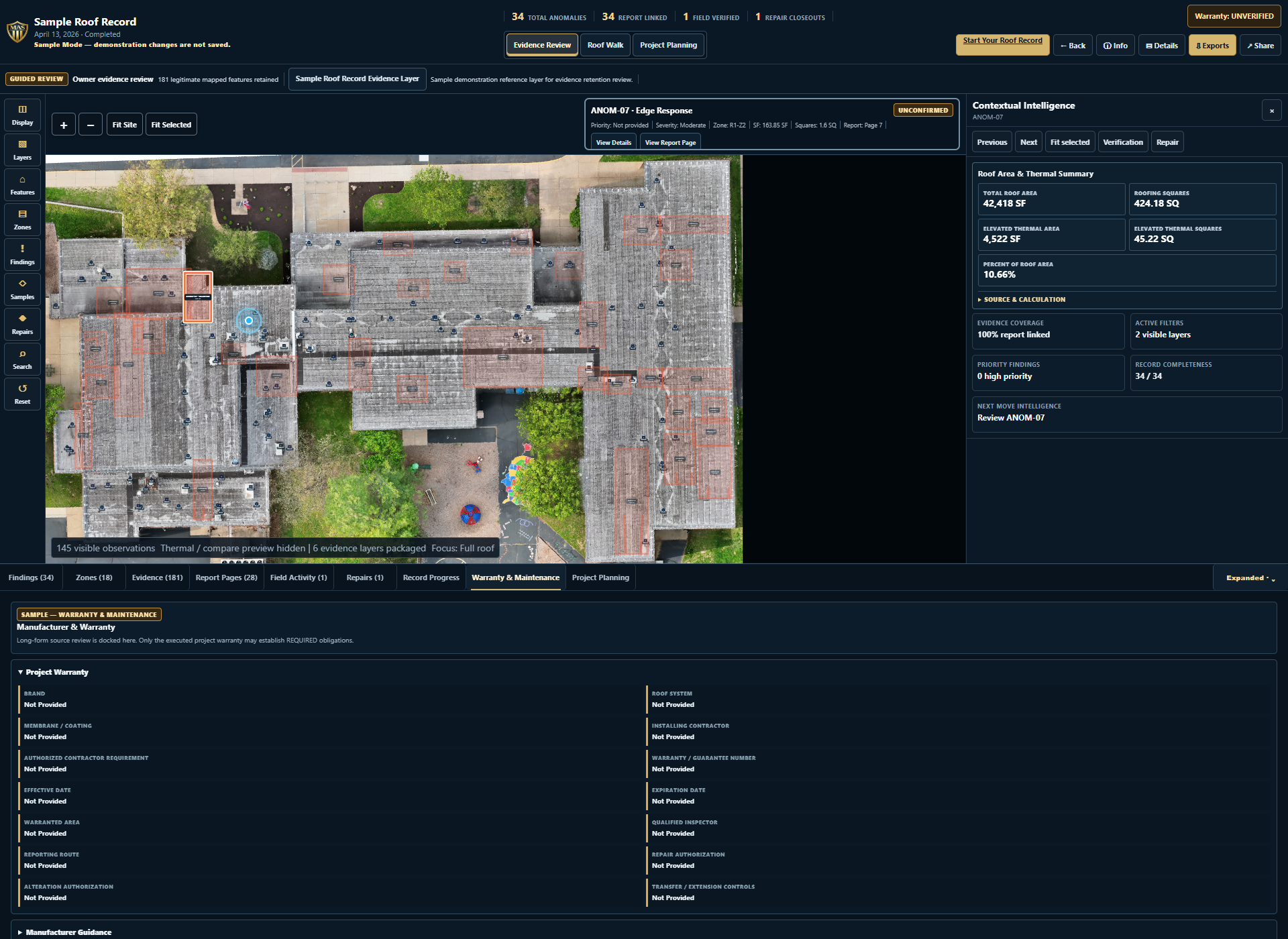
1. Establish the baseline
MAS maps the roof layout and organizes visible condition, supporting imagery, roof sections, findings, measurements, report references, and known limitations by date and location.
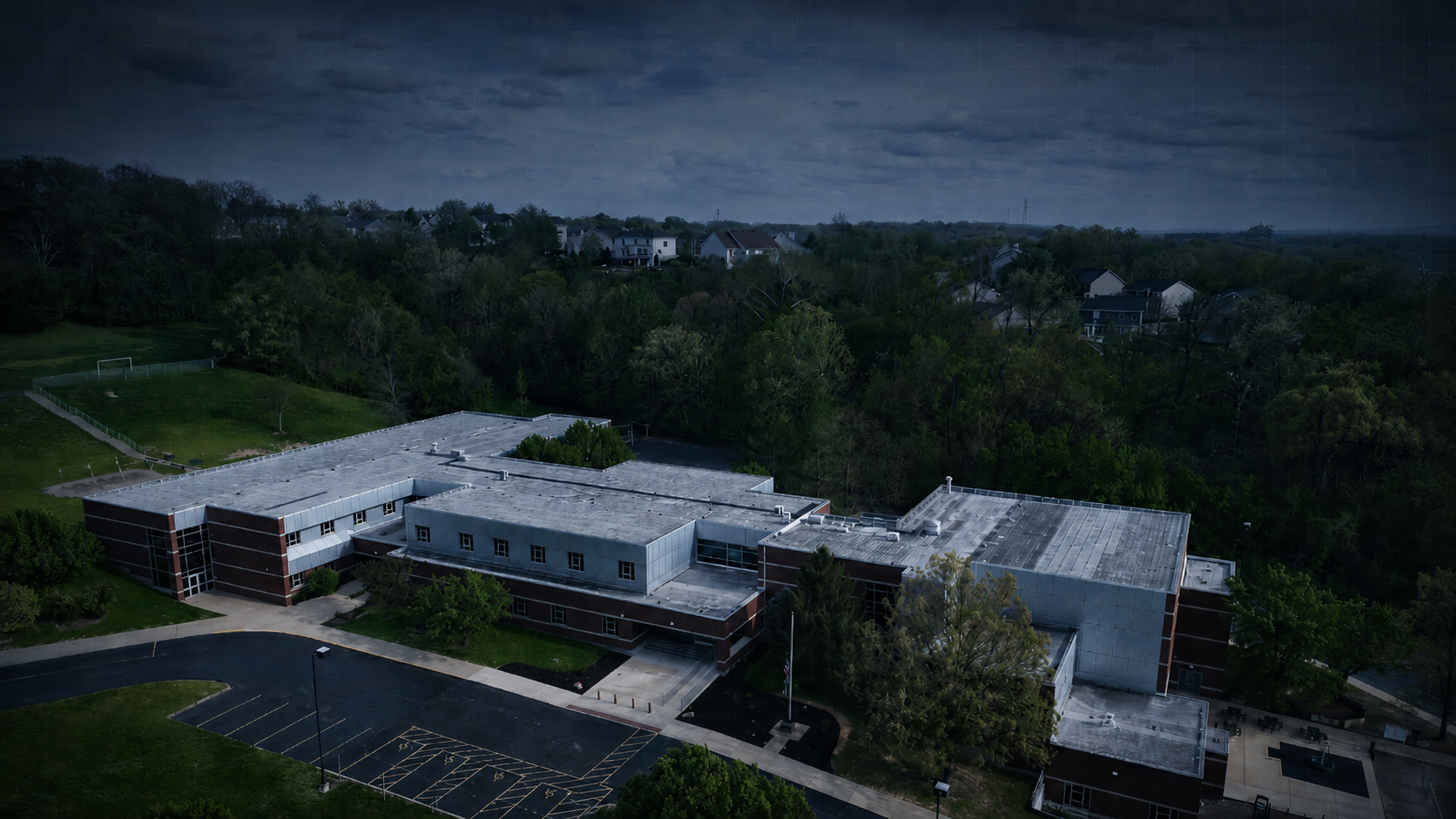
2. Verify conditions in the field
Mapped IDs direct contractor or consultant review. Notes, samples, photographs, destructive verification, and status updates remain attached to the original finding without erasing the earlier evidence.
3. Plan the project in the same map
- Access, parking, lift, loading, and staging
- Work zones, restricted areas, equipment, penetrations, and drains
- Repair areas, quantities, sequence, logistics, and crew notes
- A crew-facing mobilization and project brief
4. Close out repairs and projects
Completion dates, materials, photographs, contractor notes, mapped repair areas, closeout documents, and remaining actions stay connected to the work location.
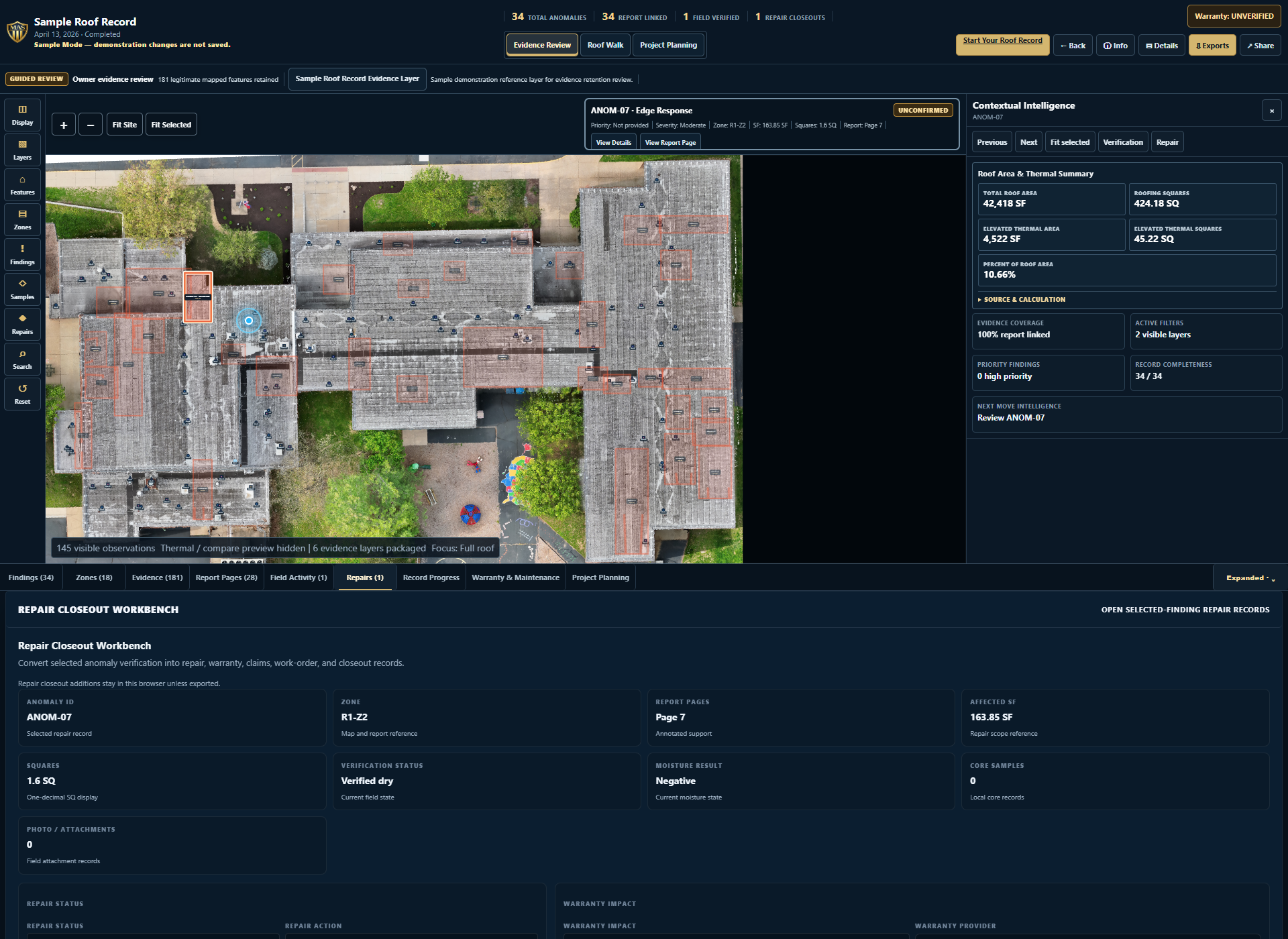
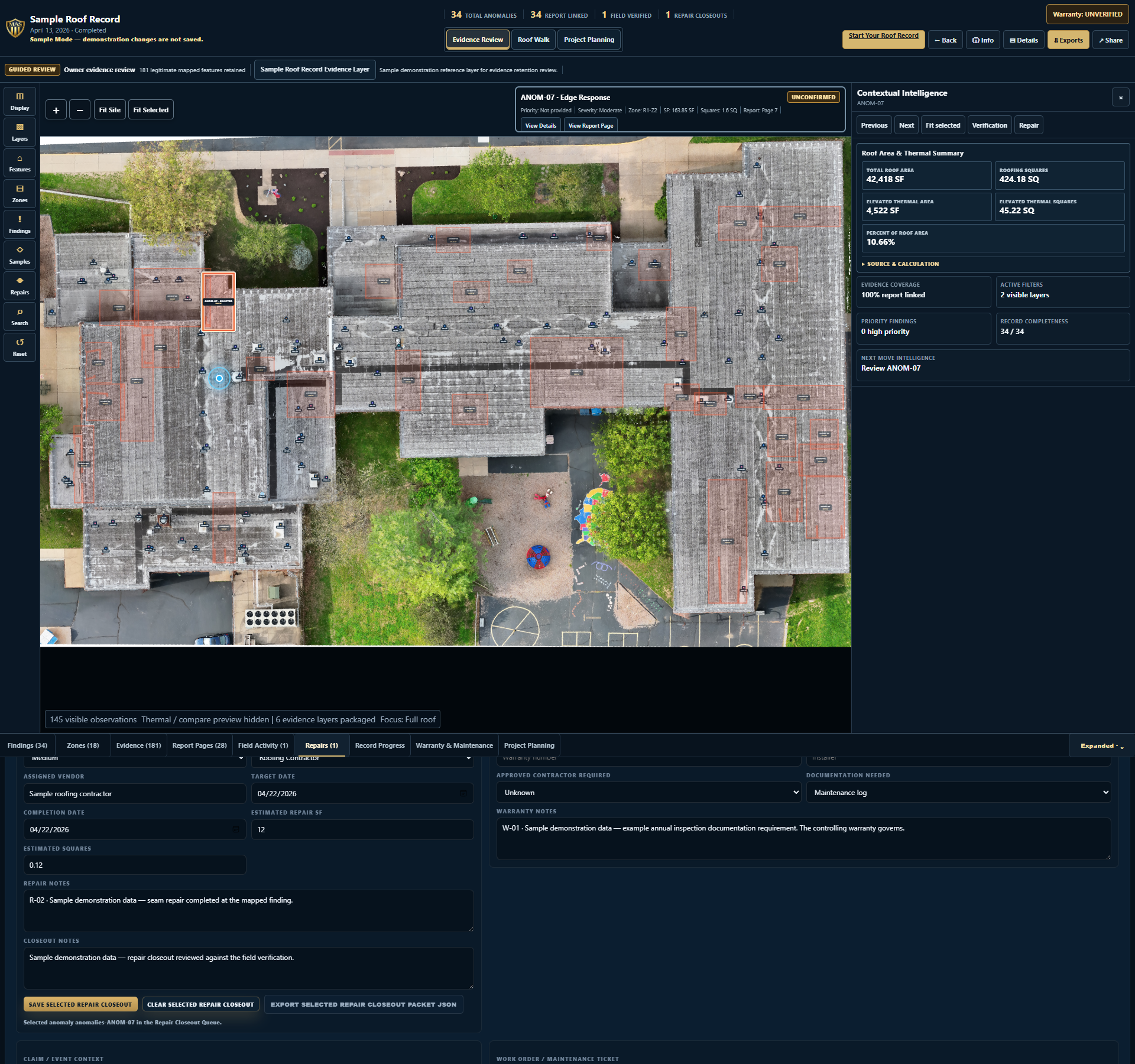
5. Track warranty and maintenance
System information, controlling manufacturer guidance, required inspections, maintenance activity, authorized repairs, supporting documents, and scheduled follow-up remain visible in the roof history.
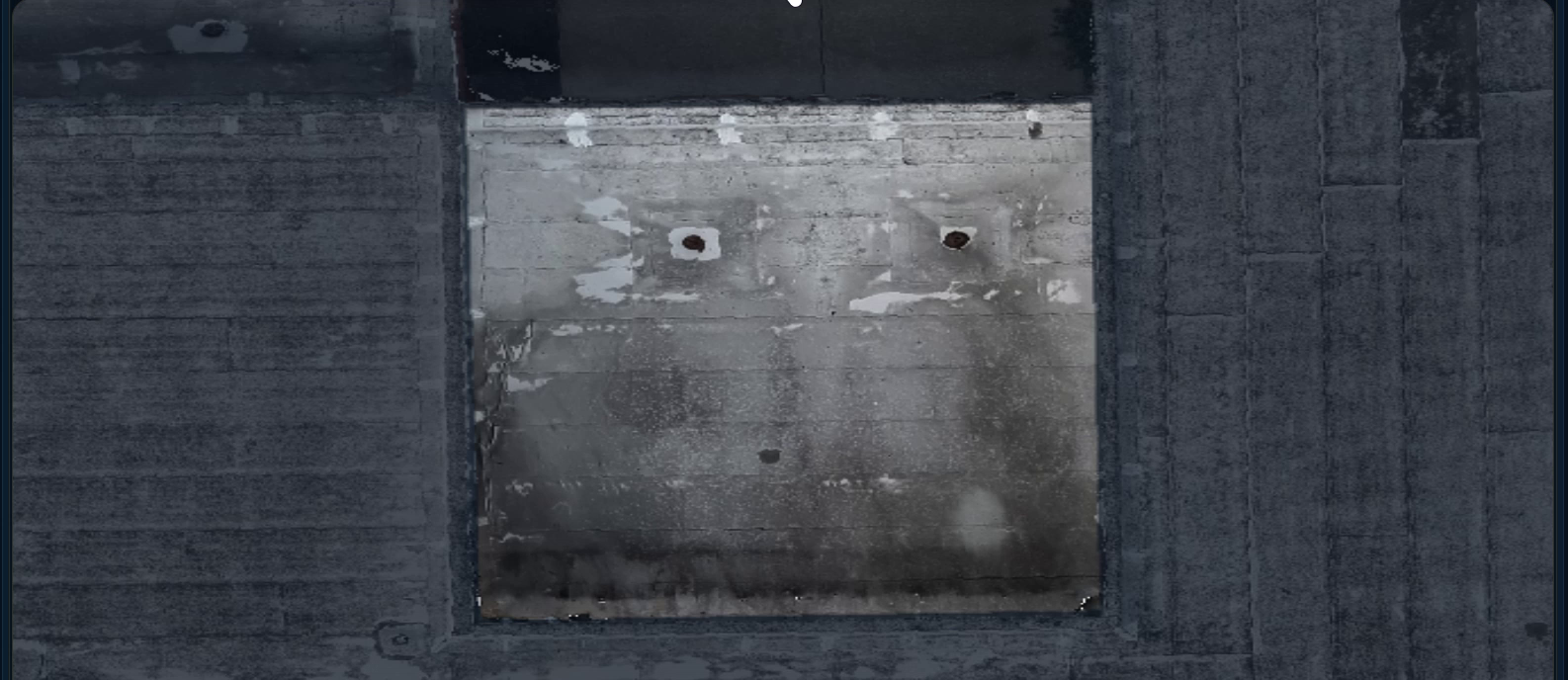
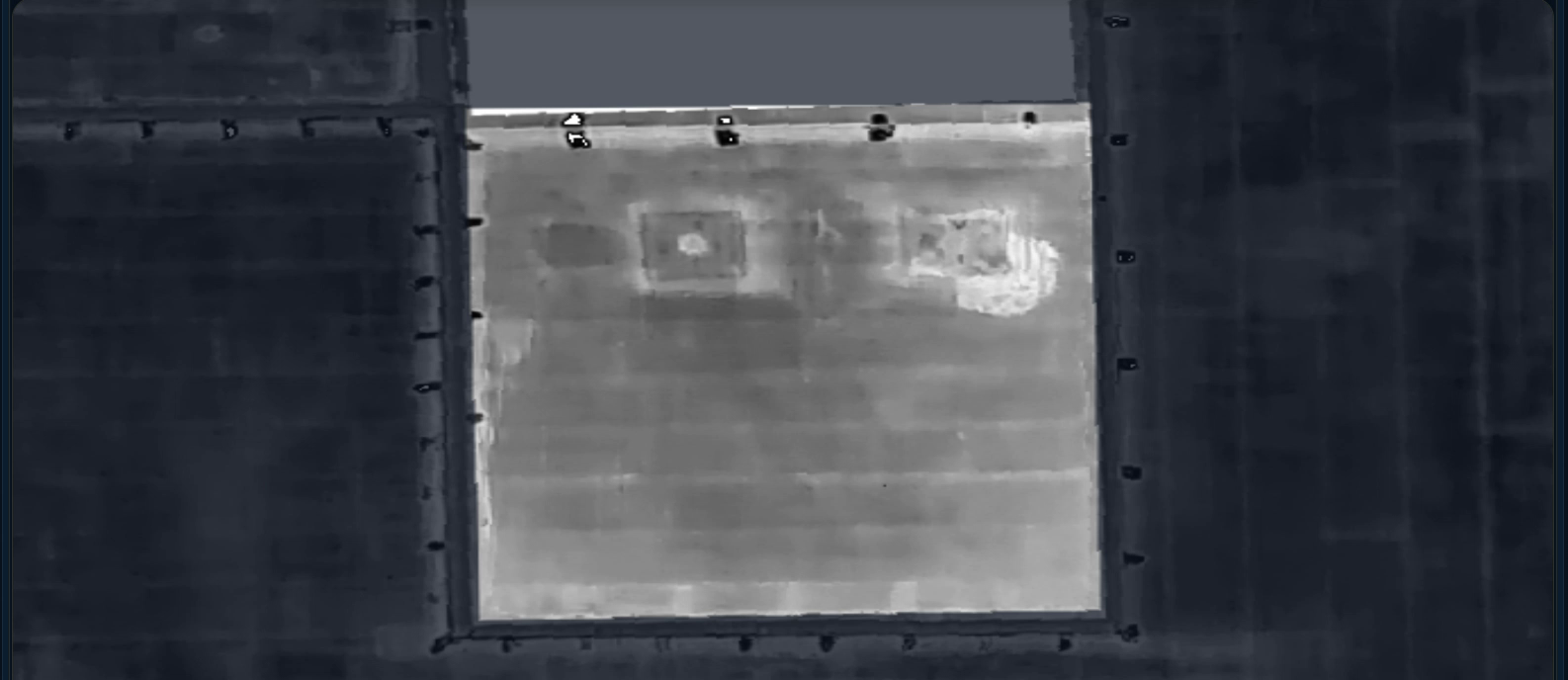
6. Compare the next event
After a storm, leak, inspection, or ownership change, new evidence can be compared against the known baseline. The record distinguishes prior condition, newly observed change, completed work, unchanged areas, and items needing field confirmation.
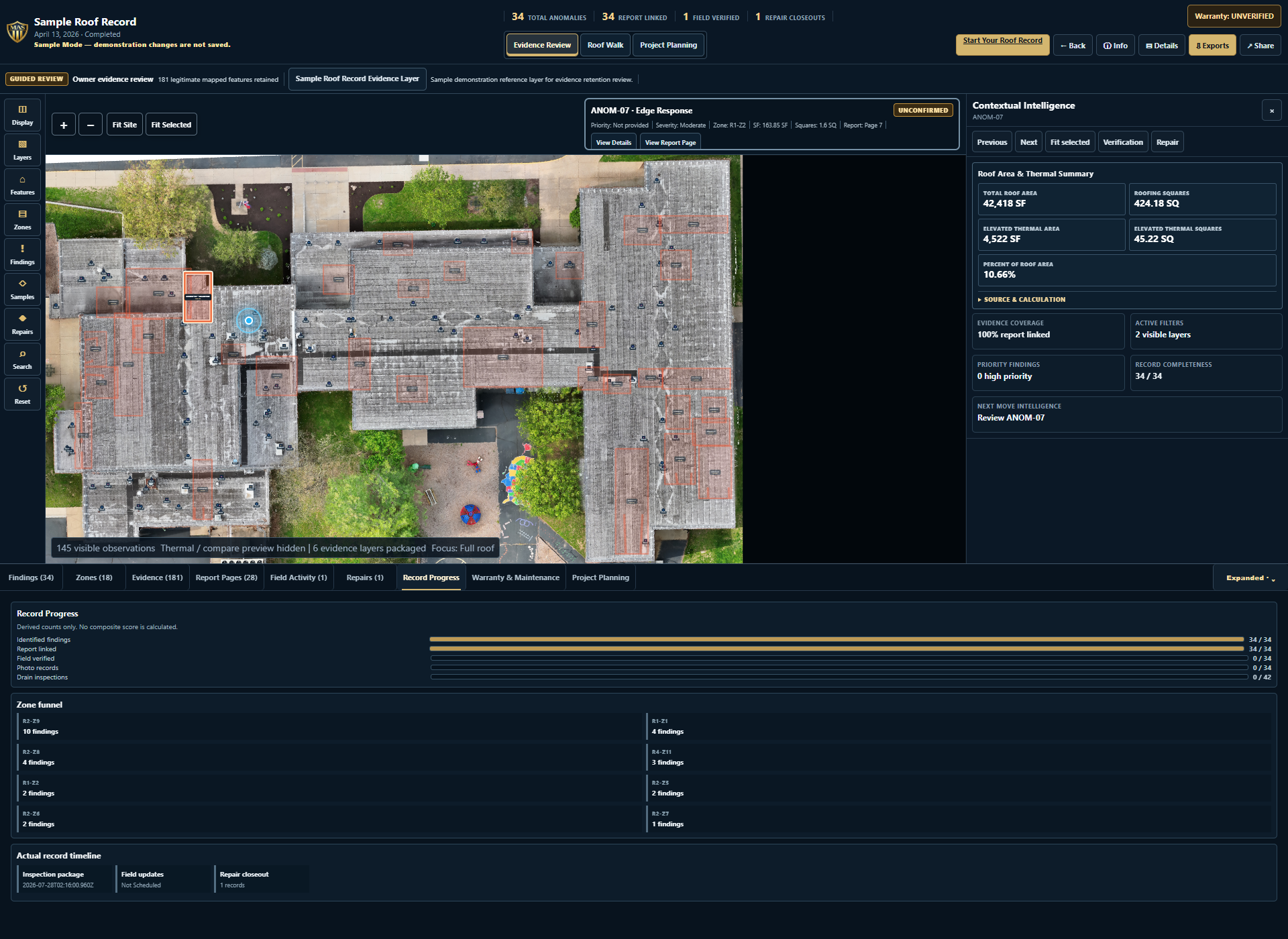
7. Use trend to support the decision
Recurring findings, repairs, maintenance, and event deltas stay visible so the next repair, replacement, risk, warranty, or capital discussion does not begin from zero.
Keep the next event connected to what is already known.
Begin with one roof and give every later inspection, repair, storm, and maintenance activity a shared starting point.